
Articles about All Categories, tagged streaming video
Celebrate Thanksgiving "For Liberty and Union"
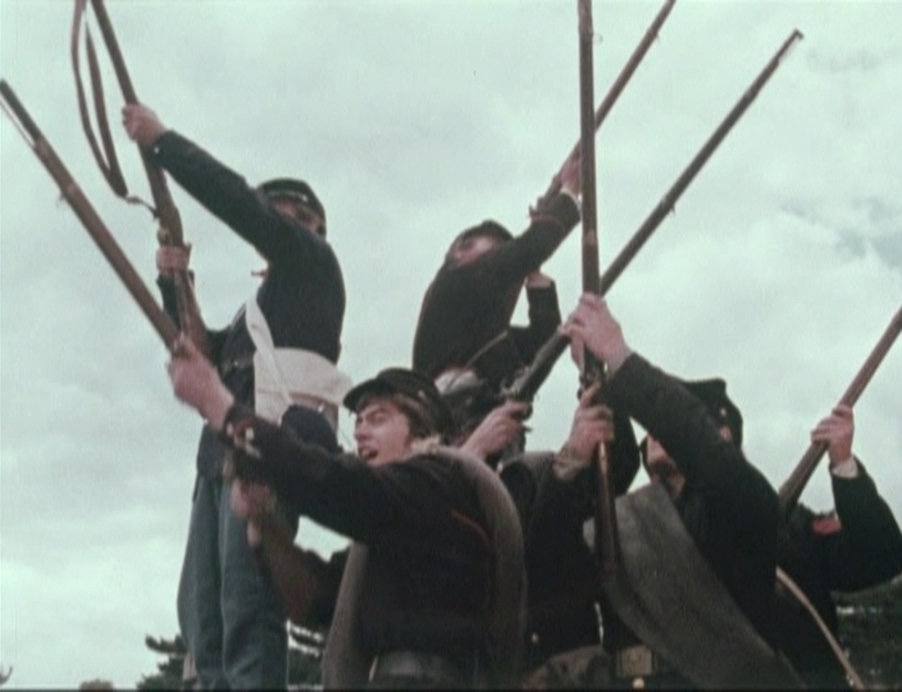 |
| For Liberty and Union (1977) |
Now available for public viewing on the NFPF website, For Liberty and Union is an example of sponsored filmmaking in the service of history. It is a dramatization of the 1861 convention that led to West Virginia breaking away from Confederate Virginia during the Civil War and becoming a new state. The film was sponsored by the West Virginia Independence Hall Foundation, a nonprofit organization dedicated to saving and restoring the Wheeling Custom House, where Unionist delegates held their fateful convention. Produced by Larry Keating Productions and local filmmaker Ellis Dungan in 1977, For Liberty and Union was also filmed within the Custom House, whose restoration was nearing completion. Opened as a museum and rechristened the West Virginia Independence Hall, the building today screens the film for visitors. This online presentation is made … Read more
More “Lost” Films Premiere at the NFPF Website
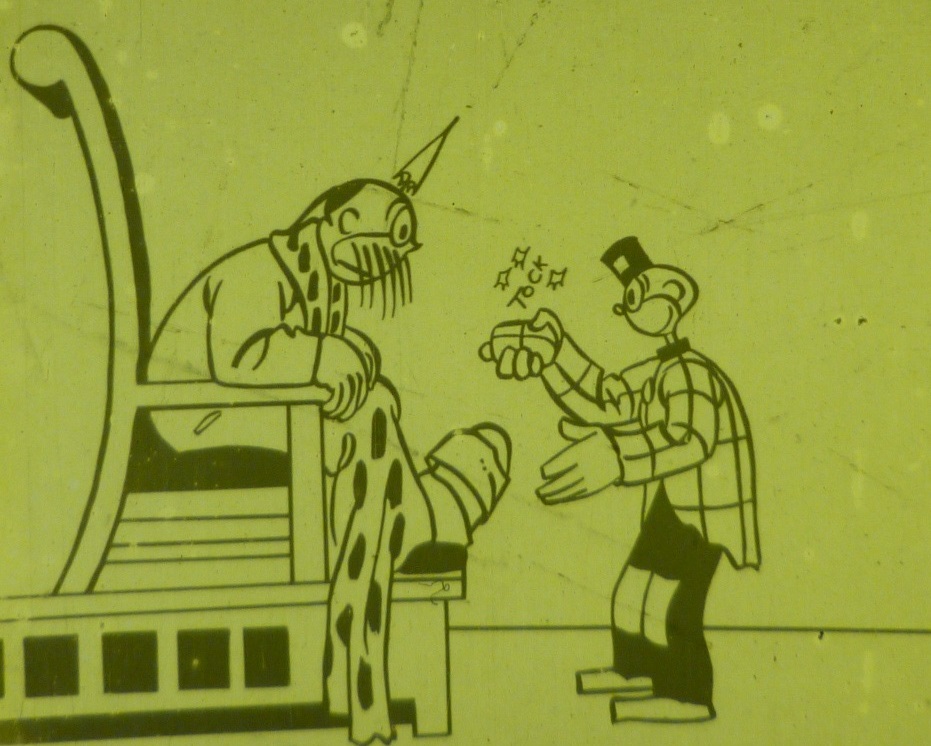 |
| Happy Hooligan meets the Emperor in A Smashup in China (1919). |
Now streaming are three more films from the NFPF’s ongoing partnership with EYE Filmmuseum in Amsterdam. These newly preserved American silent films, unseen since their original release more than 90 years ago, are accompanied by new music and program notes.
Who’s Who (1910), an Essanay-produced comedy of mistaken identity, involves a minister and prizefighter—both with the initials S.O.B.—who arrive in town on the same train. The temperance spoof When Ciderville Went Dry (1915) is thought to be the only surviving work from the short-lived Esperanto Film Manufacturing Company of Detroit. Preservation of both films was supervised by the Library of Congress; each is accompanied by notes from comedy historian Steve Massa. The Academy Film Archive supervised the preservation of A Smashup in China (1919), a Happy … Read more
Lighter Than Air, Larger Than Life: The U.S.S. Akron Onscreen
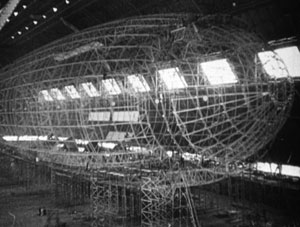 |
| Construction of the U.S.S. Akron, captured on film by the Goodyear Tire & Rubber Company and preserved by the University of Akron with an NFPF grant. |
The deadliest airship disaster in history was not the crash of the Hindenburg but the U.S.S. Akron, which claimed the lives of 73 crew members (nearly twice the body count of the Hindenburg disaster). Unlike the famous German zeppelin, the Akron’s demise was not immortalized on film, but its birth was, thanks to the motion picture department of its builder, the Goodyear Tire & Rubber Company.
In 1928 Goodyear, in partnership with the German company Luftschiffbau Zeppelin, won a U.S. Navy contract to manufacture two rigid airships, to be designed by Luftschiffbau engineers led by the renowned Dr. Karl Arnstein. The first of these dirigibles, launched on Sept. 23, 1931, was the U.S.S. Akron. 785 feet long and with gas … Read more
Recently Completed Preservation Projects: Wayne State University Historic Films
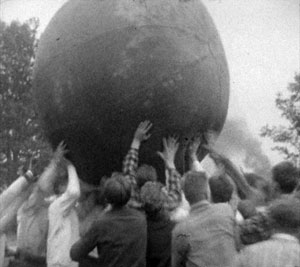 |
| A spirited game of pushball between WSU freshmen and sophomores captured on film in 1925. |
Perhaps the most satisfying moment of a film preservation project is its completion, when an archivist can rest assured that the films are finally safeguarded. Fresh from the lab, the movies are now accessible to researchers and can be screened or digitized for the general public. The most recent example is Wayne State University’s preservation of two films shot on its campus (and in Detroit) in 1925 and 1932. Preserved through a 2015 NFPF Federal Grant, the footage provides an unvarnished, non-Hollywood look at what college life was like more than 80 years ago, with freshman vs. sophomore games (bloodshed included), a “Freshman Frolic,” Christmas festivals, costumed dances (one attendee is dressed as “the Forgotten Man,” a reference to a 1932 speech by President … Read more
Orphan Film Spotlight: Adaptive Behavior of Golden-Mantled Ground Squirrels
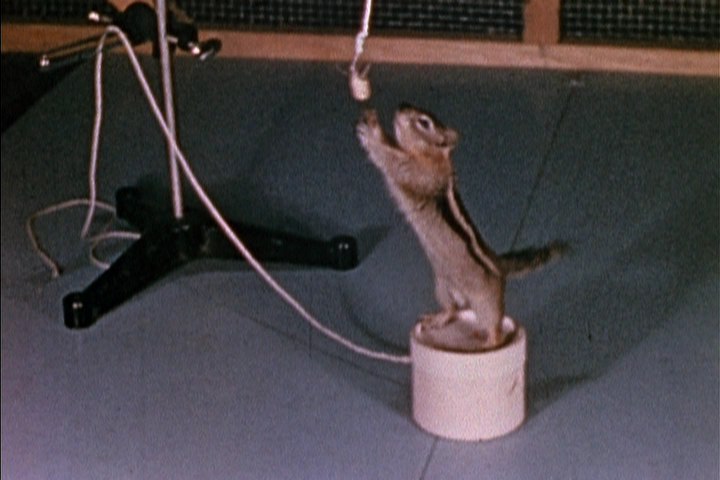 |
| Working for peanuts in Adaptive Behavior of Golden-Mantled Ground Squirrels (1942). |
Preserved by the University of Oregon, Adaptive Behavior of Golden-Mantled Ground Squirrels (1942) depicts members of the titular species (not to be confused with chipmunks) roaming around Crater Lake, Oregon, before moving indoors to show captive squirrels learning how to solve a series of increasingly challenging tasks. Tantalized by out-of-reach peanuts, the determined critters literally pull strings for food.
The man behind the squirrels was University of Oregon psychology professor and educational filmmaker Lester F. Beck (1909-77), whose love of animals stemmed from growing up on an Oregon ranch; he would later build a house that allowed wild rodents to crawl into a maze suspended from the living room ceiling. Beck called film “one of the greatest aids to learning since … Read more