
Articles about All Categories, tagged streaming video
Happy Thanksgiving
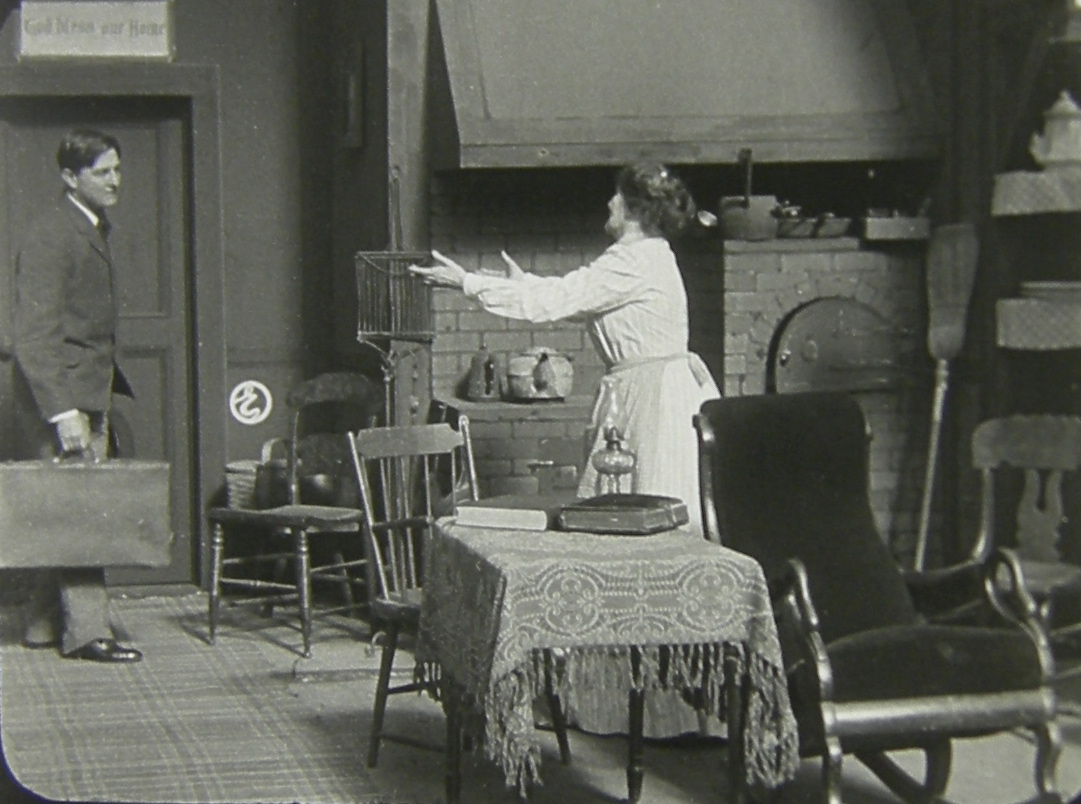 |
| His Mother's Thanksgiving (1910) |
The NFPF would like to give thanks to all of our friends and supporters. To celebrate the holiday, we hope you will enjoy His Mother's Thanksgiving (1910), a melodrama from the Edison Studios about the importance of being with family at this time of year. A contemporary review from Variety reported that “A young man in one of the theatre boxes wept silently, which was the best testimonial imaginable for this picture.”
Preserved under the direction of The Museum of Modern Art, His Mother's Thanksgiving is one of the 176 films that were returned to the US as part of our successful collaboration with the New Zealand Film Archive.
Before you get ready for feasting, here are a few reminders and announcements:
- You probably know about Black Friday and Cyber Monday, which follow on the heels of Thanksgiving. But do you know about Giving Tuesday? Held on … Read more
Six “Lost” Films Premiering on the NFPF Website
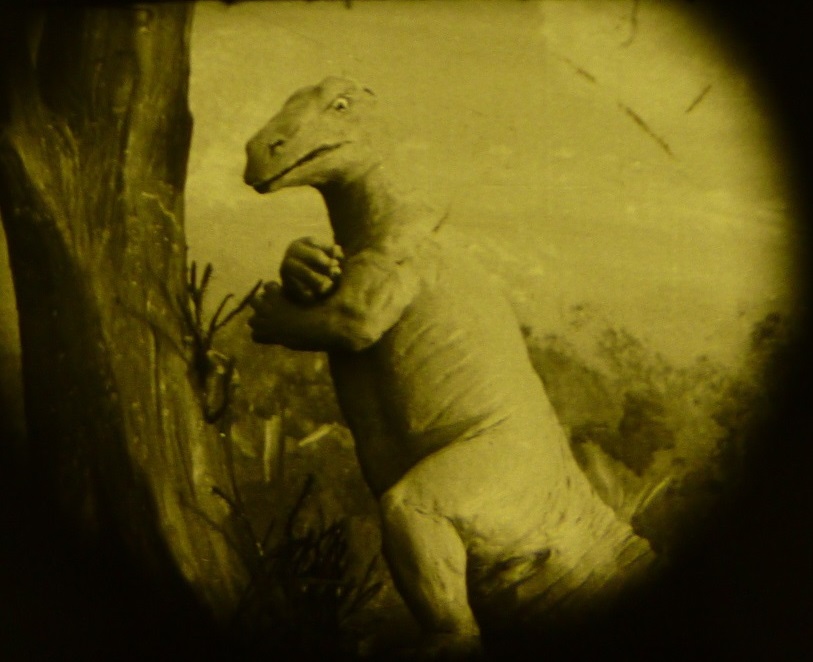 |
| An Iguanodon demonstrates what life was like Fifty Million Years Ago (1925). |
Now available for viewing are the first fruits of the NFPF’s partnership with EYE Filmmuseum in Amsterdam. Six newly preserved American silent films, almost all unseen since their original release more than 80 years ago, are now freely available to the public, complete with new music and program notes.
Chicago Rodeo (1920) depicts Tex Austin’s rodeo show, held in Chicago’s Grant Park in July 1920, and includes appearances by Ruth Roach, Foghorn Clancy, and “Yiddish Cowboy” Dizzy Izzy Broad. Clarence Cheats at Croquet (1915) is a comedy from the Thanhouser Film Corporation involving a jealous lover with no sense of fair play—its preservation was co-funded by Thanhouser Company Film Preservation, Inc. Both films were preserved through the Library of Congress.
New in the Screening Room—A Regular Bouquet: Mississippi Summer (1964)
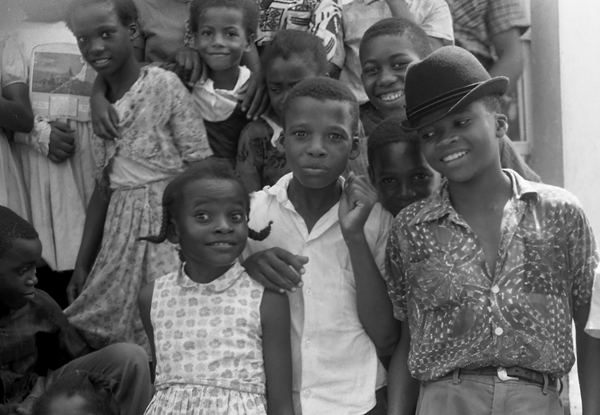 |
| Students at a Freedom School in Mississippi in 1964, photographed by Richard Beymer. Courtesy Washington University Film & Media Archive. |
Actor Richard Beymer took a Bolex camera to Misissippi in the Freedom Summer of 1964. He documented the African American community alongside his fellow activists and volunteers working to register black voters and provide educational instruction to children. The film has been preserved by the Washington University Film & Media Archive with a grant from the NFPF. The New York Times profiled the film on the occasion of its 50th anniversary here.
Beymer’s film is an astonishing document of a turbulent moment in American history. He captures the joy of community life while at the same time providing a clear-eyed view of the struggle for equality. Nadia Ghasedi, who leads the Visual Media Research Lab at Washington … Read more
Orphan Film Spotlight—Roach’s Lullaby (1973) and Welcome to Spivey’s Corner (1978)
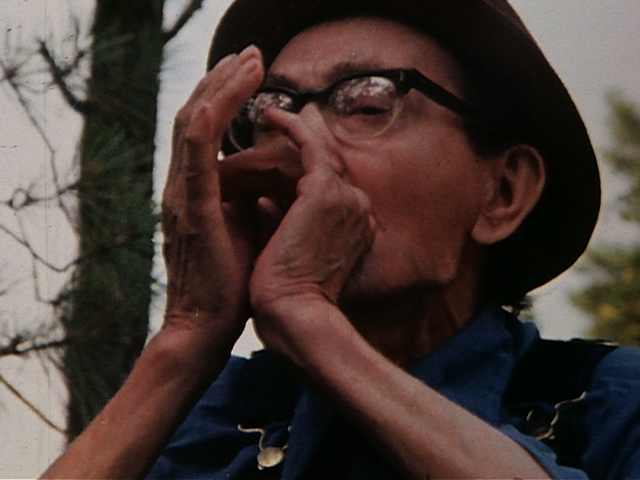 |
| Coharie elder Leonard Emanuel demonstrates hollerin' techniques in Welcome to Spivey's Corner (1978). |
Thanks to everyone who attended last week’s Exploratorium screening of films preserved through NFPF funding. Those who couldn’t make it will be glad to know two of the screening’s biggest hits can be watched online.
Roach’s Lullaby (1973), preserved by the New York Public Library, was praised by the New York Times as a witty and “bold excursion into one of the city’s great conflicts—the war against the roach.” The documentary profiles three New Yorkers who demonstrate eccentric methods of pest removal. Directed by Claudia Weill and Eli Noyes, Roach’s Lullaby is a prime example of on-the-go, hand-held 16mm documentary-making. And yes, it has a song about roaches.
Spotlight on Home Movies
 |
| Slavko Vorkapich, 1940 |
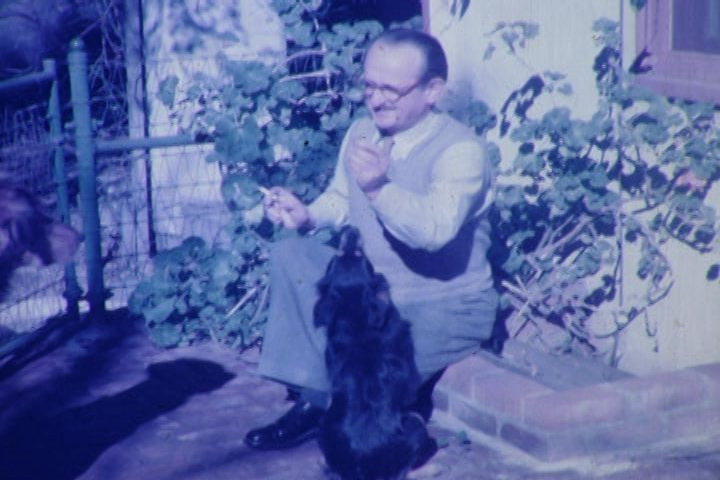
Last Sunday, TV viewers were treated to a news segment on home movies, broadcast by CBS Sunday Morning. Now available online, "Bringing the importance of home movies into focus," showed the origins of small-gauge consumer filmmaking and emphasized the need for preservation by featuring archivists from George Eastman House and The Center for Home Movies.
Those organizations and many others have received funding from NFPF grants to preserve hundreds of home movies, many of which are now online. Here’s a brief but diverse sampler: From the Mayme A. Clayton Library & Museum come the home movies of Marie Dickerson Coker, an African American jazz musician, dancer, and pilot who filmed in Honolulu during the second world war. From The Clyfford Still Museum comes a home movie of Clyfford Still in his studio, the only known moving images of the Abstract Expressionist … Read more